
Paper Manufacture/Converting Application Note
Release time:
2026-03-18
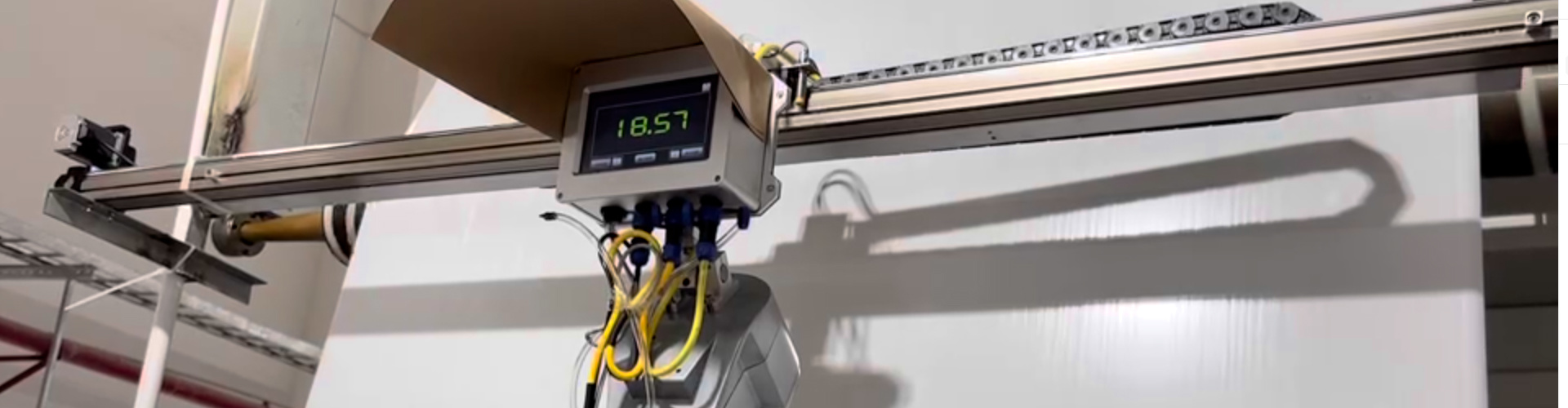
The InSenxe infrared sensor measures moisture in paper. Control of the final moisture content of paper is extremely important regardless of whether the paper is to be used in further converting operations or not. Moisture level and distribution play an important role in the calendering process and influence most physical properties of paper; finish, texture and curl characteristics. In the converting industry, moisture content also affects the paper’s ease of handling (feed ability) and the success of the coating/lamination process.
Moisture in Paper
The InSenxe infrared sensor measures moisture in paper. Control of the final moisture content of paper is extremely important regardless of whether the paper is to be used in further converting operations or not. Moisture level and distribution play an important role in the calendering process and influence most physical properties of paper; finish, texture and curl characteristics. In the converting industry, moisture content also affects the paper’s ease of handling (feed ability) and the success of the coating/lamination process.
Paper Manufacturing Process
Water, chemicals and heat are applied to wood chips in the Digester, causing the lignin holding the wood fiber together to dissolve. Recycled fiber, water, and, in some cases bleach, are added to create pulp slurry which is sprayed onto a moving flat wire screen. This acts as a sieve allowing the water to drain off the lower side, and fibers to bond as they dry. The pulp sheet, also referred to as stock, is transferred to a felt and conveyed through a series of press rollers, where further water is extracted and the surface is smoothed in a process termed calendering. At the exit of the calender, the “paper” comprises 40-50% solids or 50-60% moisture. Heated rollers reduce the moisture content to approximately 5% before the paper reaches the size press, further drying rollers and slitter. A special coating, sizing, is applied at the size press which makes the paper less absorbent and more able to hold ink. The slitter slits the wide paper roll into smaller rolls or in some instances into sheets.
Converting Process
Converting is the operation of modifying, treating or manipulating finished paper.
Each action that is applied to the paper will upset the moisture equilibrium resulting in the need for moisture measurement in order to ensure the paper is “ready” for the next stage of the process.
Ideally paper is in balance with 74ºF/50% relative humidity. Papers are generally made to contain between 4-7% moisture.
Measurement Locations
Paper Making Process:
Exit of wire: this is a difficult measurement owing to the thickness of the stock, and stratification of moisture. Ideally two sensors are needed on either side of the web.
On a heated roller: the air purge diffuser is required and if ambient temperature exceeds 120 ºF, water or air cooling of the sensor is advisable.
Exit of size press.
Final moisture prior to slitter.
Converting Process:
Typically at the exit of a re-humidifier, or on facing paper prior to lamination.
Moisture Measurement Performance
Measurement | Range | Typical Accuracy |
Exit of Wire | 50-90% | 1.0-1.5% |
Heated Roller | 2-10% | 0.15% |
Exit of Size Press | 15-40% | 0.3% |
Final Moisture | 4-7% | 0.15% (depends on basis wt.) |
Within a Converting Process | 4-7% | 0.15% |

Address: Room 604, No.33 Jianshe Sixth Road, Yuexiu District, Guangzhou
Telephone:+86-(020)8618 7789
E-mail:mail@tongfei.net | sales@tongfei.net
Focus on us


Certificate Report Query,Document Information Query,Recruitment Management,Anti-counterfeiting query,3D Presentation
Copyright©2024 Guangzhou Tongfei Technology Co., Ltd. All Rights Reserved